My Development as a Future Leader

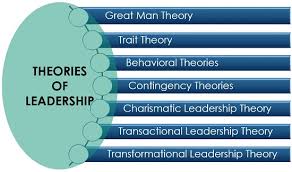
A leader is someone who exerts influence over other people. Being a leader can be an important part of being manager so, again, there is numbers of theories that a leader can learn in order to make them more successful (Huczynski, 2007).

Trait theories argue that good leader have certain natural attribute or qualities that allow them to lead such as a cheerful personality, or fairness. Leader are therefor born not made. Trait theories have been largely discredited, (Galton, 1869).

Style theories argue that certain leadership approaches or style can be learnt and used by a manager, depending on the situation, (Lewin, 1930).

Contingency theories suggest that there is no correct style, or approach. instead, successful leadership involves adapting to the Particular circumstance in which the leaders find themselves, (Adair, 1960).
My leadership brand

After my study of the leadership course and some researches I have done, I am very attracted to the Bennis (1985) transformational leadership style. Transformational leaders see their role as inspiring and motivating others to work at level beyond compliance. Only transformational leadership is said to be able to change team/organizational cultures and move them in a new way.  I was reading about Toyota founder and other successful leaders story including Mahatma Gandhi, the one common thing they all have, is change, they all were not happy with the situation they were in, then they decided to change. Again this is all about transformation.

Kingsmill, (1913) argue that leadership is not about leader, rather is about building the confidence of other.

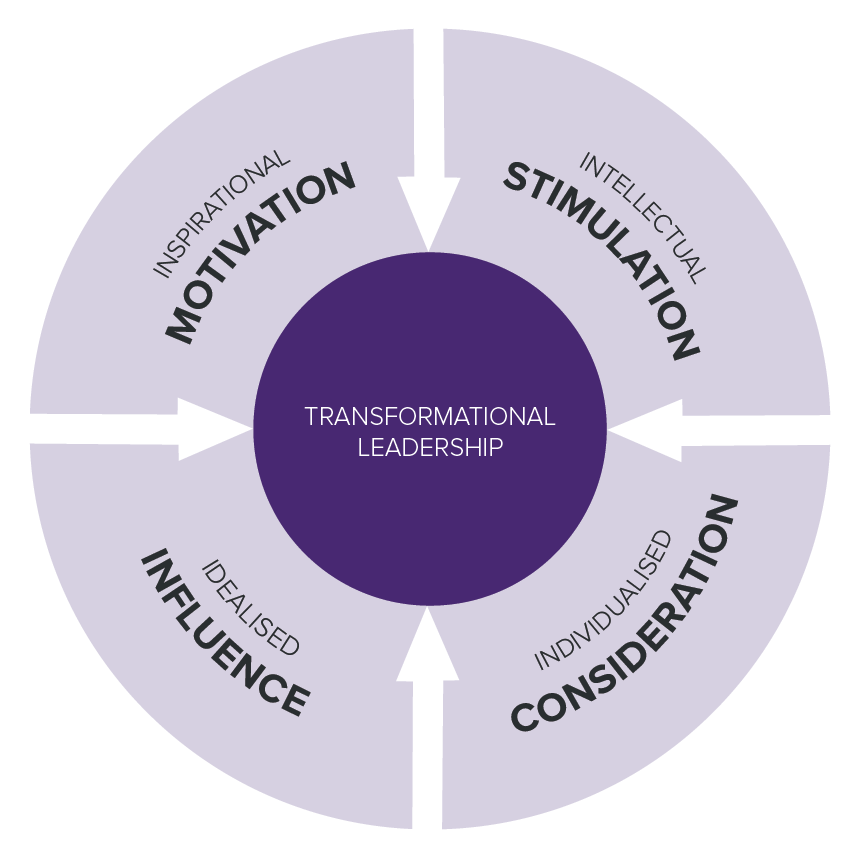
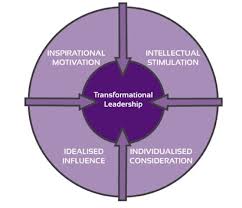
According to Burns (1978) transformational leadership comprise of three basic components:

  • Idealized influence, the charisma of the leader, and the respect and of the followers
  • Inspirational motivation, the leader action, meaningful and challengeable to the work of the followers
  • Individualized consideration, leaders who listen and are concerned to the growth and development needs of the followers.

Transformational leader is the true meaning of leader.
https://www.marketing91.com/transformational-leadership/

the relevance of my leadership brand to my chosen career

As a leader I have always believed in (Lewin, 1930) persuasive leadership style, is the best approach to lead, (I take the decision and persuade other that the decision is correct). As a student I never liked to be a leader personally but I am someone who speaks when something I believe it’s wrong, or unjust, thus unknowingly making me a leader in most situation. I have completed my bachelor degree in 2017, although I was very good at my course, achieved high marks, but I wasn’t confident enough to go and start my business. Then I decided to pursue my master, in the program luckily I found the leadership course, I didn’t see its relevant in the beginning until few weeks later while studying some cases about leadership failure, then I knew even if am good at my job, without effective leadership skills I can persuade no one to follow me or get any job done effectively. Out of all the leadership theories I read, the transformational leadership, (Burns, 1978) seems to be more relevant to my career. This is because I always want to improve myself and everyone around me. Thus transformational leadership is more suitable to my personality.

My feedback as a leader

After listening lot from my fellow and other I worked with with for a long and short period, there are few obvious things they all highlighted about me, from which I always take decision that concerning me and others without counselling them, or just try to persuade them that is the best to do. The other thing I hear more often is said I am someone who like to take control of the people around or working together. Both these behaviors may not let me be the transformational leader that I would like to be, but trying harder to overcome them in the future.

The good thing my fellow highlighted about me, is I am a leader who speaks not only for himself but concerned about others issue as well, always speaking when something wrong, not being quit and ignore it. The other thing they highlighted is am a leader who understand others weakness and help them work through rather than criticized them.

My development plan

All these above feedbacks are my reflections and area to work on. As we can see getting constantly honest feedback from my fellow is the best tools to improve myself. There are some behaviors which is linked to my culture and personality which are very hard to overcome, (Hofstede, 1980). Then again getting advices from people I admire and trust, learning from the leadership theories and attending some guess lectures are crucial to overcome my weakness and improve my strength.

Overall I am very satisfied and grateful to this leadership journey I went through in the last few months, and hope all these lecture and the group activities will enhance and contribute to my future.

Reference:  

Adair, j. (2019). John Adair – Leadership & Management. [online] Johnadair.co.uk. Available at: http://www.johnadair.co.uk/ [Accessed 3 Apr. 2019].

Burns, j. (2019). Transformational Leadership Theory – Meaning, Criticisms and its Implications. [online] Managementstudyguide.com. Available at: https://managementstudyguide.com/transformational-leadership.htm [Accessed 3 Apr. 2019].

choy, A. (2008). The Leadership Quarterly Yearly Review 2008. The Leadership Quarterly, 19(6), p.634.

Hofstede, G. (2011). Dimensionalizing Cultures: The Hofstede Model in Context. Online Readings in Psychology and Culture, 2(1).

Kotter, J. (1988). The leadership factor. New York: Free Press.

Lewin, K. (2019). Leadership StylesChoosing the Right Approach for the Situation. [online] Mindtools.com. Available at: https://www.mindtools.com/pages/article/newLDR_84.htm [Accessed 3 Apr. 2019].

Mullins, L. and youssouf, A. (n.d.). Management and organisational behaviour. 11th ed. London: Pearson, pp.326-266.
Change management

Organization some time faces unexpected management change requirement, mainly affected by external environment driven by new regulation or political pressure etc…(Kaplan 2018)

As for in this case Brexit uncertainty causing many organizations to face change, particularly the multinational and other EU company, (BBC 2017) Brexit become major concern of many organization future of weather to continue in UK or leave. This bring the question of the needed changes an organization implement to cope with the situation, from which management change is the crucial part, (Jams O 2009). In selecting an approach to management change, most organization struggle with the question of how bold they should be. In one hand to fundamentally transform the organization, a break with the current position is needed, (Kaplan 2018). On other hand the value of continuity which was builded in past experiences should be recognized, this could be environment adaptation, team spirit, etc…. ( Antoine, P 2004) . To achieve lasting change of management, people in the organization will need time to learn, adapt and grow into new organizational reality.

BMW is one of company that affected by Brexit uncertainty and had to shutdown some of its operation “We have scheduled next year’s annual maintenance period at MINI Plant Oxford to start on 1 April, when the UK exits the EU, to minimise the risk of any possible short-term parts-supply disruption in the event of a no-deal Brexit,” BMW said. It employs about 4,500 people, the concern is that in the event of the UK leaving the EU without a deal on 29 March, there could be disruption at the management and shortages of employee. As we can see from this BMW need to make some change in its management to adjust with the Brexit no-deal, ( BMW 2019)

However, any change in an organizational management has potential to come up against level of resistance from staff, staff who have lot of power from their current organizational role, for example maybe very reluctant to give this power. A change leader need to examine how this resistance might be overcome.

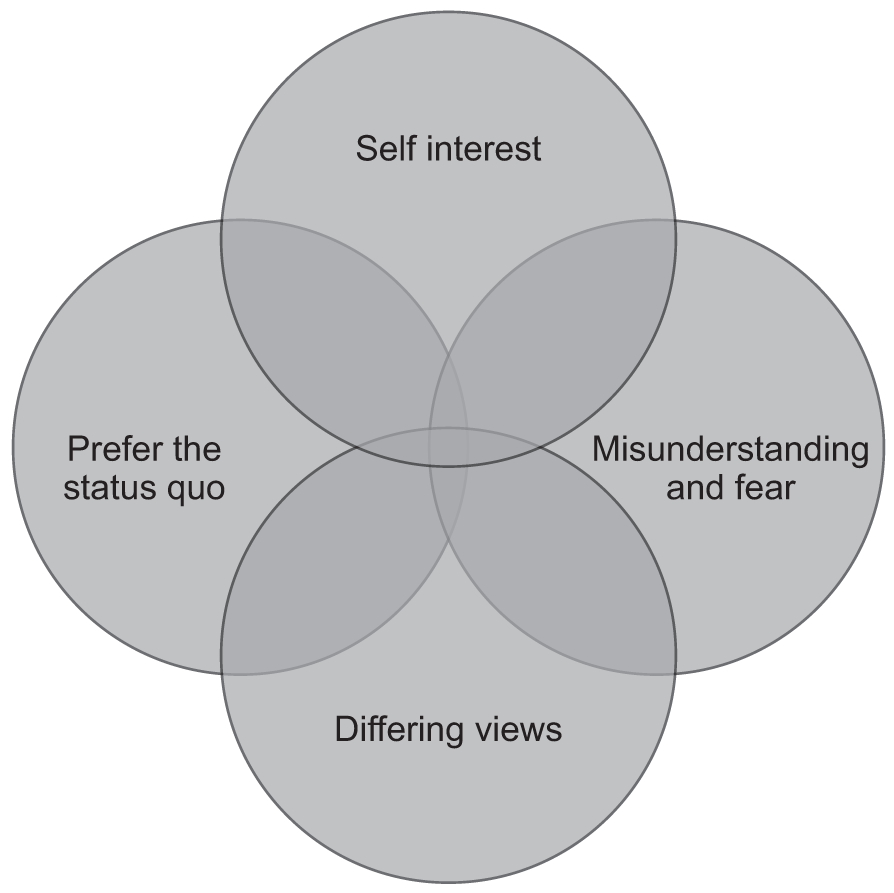
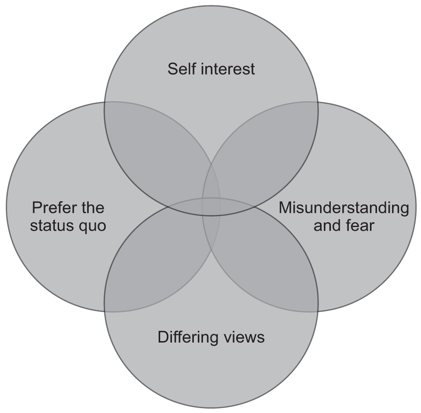
According to kotter and Schlesinger (1979) there are four reasons that may make organizations management difficult to change.

Solution to the problem

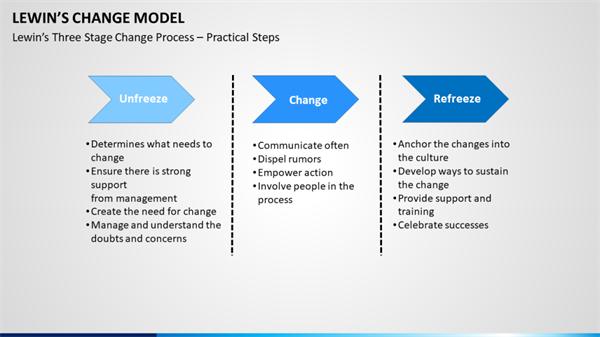
Kurt Lewin 1951 developed a simple model for achieving successful change and overcoming resistance in three steps:

Staff need to have the right skills and motivation to curry out the tasks. They need to understand task and their roles within the organization. Staff need to develop to support management changes and resistance to change has to be managed and overcome. This will involve understanding and sometimes shifting the organization culture to cope with the new management structure (Mujkic, A 2014).

Action

BMW should first convince its employee of the current situation that is no longer desirable and need to be changed, this can be achieved through persuasion and motivation. Then there should be a clear communication of the required change, position, role, task and concept being adapted. Some change need to be supported by additional training and resources. Lastly to overcome anxiety about job security, BMW should introduce fresh challenge in job, improved reward and increase job discretion. BMW should be organized, job roles need to be clearly defined and understood, line of command and communication need to be effective, the management structure need to support the organizational strategy, there need to be flexible in changing environments and bureaucracy needs to be kept at minimum.

Learning outcome

The resulted outcome achieved through this change management is that every organization should be always prepared to adapt any management change needed in the future, this could be achieved through having flexible changing environment, effective structure. In addition there is always been resistant from staff but as Kotter suggested, participation of staff in the decision, continuous training and clear outline communication can play a major role in time of change management.

Reference:

Kotter & Schlesinger four causes of resistance to change [online] available from <https://www.tutor2u.net/&gt; [11 february 2019].

Laurie J. Mullins (1985) Management change, Pearson eleven edition financial time pitman publishing (2016), pp. 475-477

Burns, J. M. (1978). Management change and conlfict. New York: Harper and Row.

Mujkic, Alisa, 2014 management change  AND EMPLOYEE SATISFACTION, proquest [online] available from <https://search.proquest.com/abicomplete/docview/1645743058/fulltextPDF/8374E40E55D04F19PQ/1?accountid=10286 > (12 March 2019).

James O. McDowelle, 2009, Journal of Curriculum and Instruction, A Contemporary Consideration of management change, Volume 3, Number 2, (November 2009).

Antoine, P. (2004) Lewin’s theory of management change [online] available from < http://www.stfrancis.edu/ba/ghkickul/stuwebs/btopics/works/fied.htm> (12 March 2019)

Contemporary leadership style

One of the greatest challenges confronting organizations is how to select and develop leaders.

Many Leadership theories were written by scholars, some were very effective and other were criticized for impractical the main arguments were as culture and generation change the leadership style change along, lot of contemporary leadership theories are no longer applicable modern era (kevin 2004). But the trouble with leadership theories is they’re easy to hide behind often inaccurately. They become proxies for actual leadership when something important is on the line, people don’t follow Fayol’s segregation of activities or Mintzberg’s three categories of managerial roles they follow real people. Leadership has evolved to the extent that our human context has evolved On the other end of the spectrum is the Situational Theory of leadership​​​, which presumes that great leaders are more the product of circumstantial factors than innate ability (USB university, 2017).

Issues of leadership in today’s world

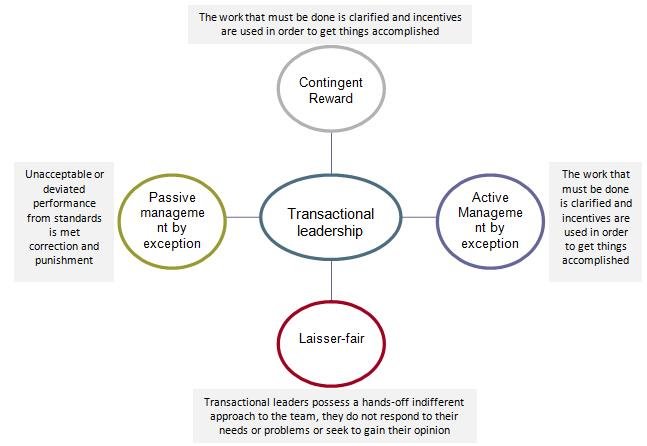
Historically in an organization people more engaged in production where a particular leadership is applied, such as transaction leadership or autocratic style, where workers are motivated by rewards and managers lead by transaction with their followers in respond to the behavior of workers and to boost production, (Max Weber in 1947) only handful of people possess basic knowledge. These leadership styles were indeed effective in the last centuries and this led to substantial growth of economy They were more affective to undertake operations efficiently, manage large corporations, or lead international projects that require rules and regulations to complete objectives on time or move people and supplies in an organized way, (Mujkic, Alisa, 2014).

The challenges current leaders are experiencing in leading in a changing world

The biggest challenge current leaders facing is managing the different geographical diverse culture employee in respond to the globalization, more global mindset managers are needed for building & fostering value creation, also the global skill set which is far beyond just language but social etiquettes. The rapid changing environment, the different national culture and different team need are also of the challenge leader need to be dealt with which require huge amount of corporation between leader and the followers, (Kevin, 2004).

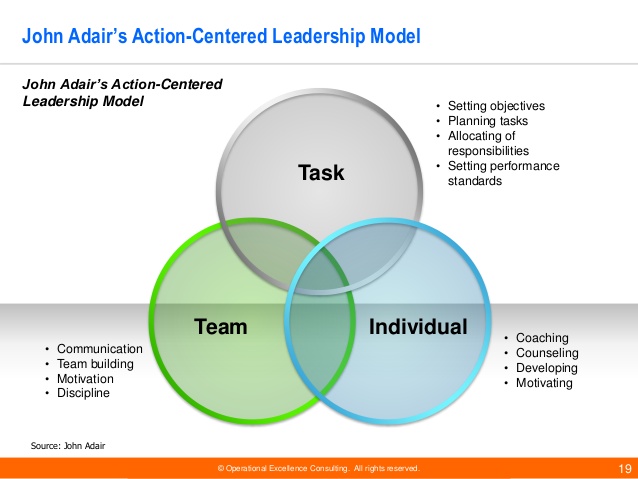
John Adair team theory

HP as an example

The transactional model is likely to succeed in a crisis or in projects that require linear and specific processes. Hewlett-Packard, a company known for its extensive use of management by exception it was very successful and inspiration to the employee in 1990s sales grew by 20% between 1992 & 1996 with an increasing dependency on the low margin PC & Printer business. By 1997, HP was among the top 3 manufacturers of PC. Due to the change in social and culture in the recent years (HP) board of directors have been in the limelight for wrong reasons. Four CEO’s were hired and replaced in the last decade and three CEO’s changes were within a span of 1.5 years. The board has not been able to find the right leader to fit into the HP’s Cultures of doing things. The uncertainties in leadership has led to a huge loss for HP in terms of decreased market value, dissatisfied shareholders and blurred strategic vision, (Kort, 2018).

Whereas in today era people engaged more in knowledge oriented job and production are mainly left to the machine, some of the traditional leadership are not a good fit for places where creativity and innovative ideas are valued. The other leadership style that frequently being used by some managers is the transformative leadership, (Burns, 1978). Burns, said that “transformational leadership occurs when one or more persons engage with others in such a way that leaders and followers raise one another to higher levels of morality” (1978). Mohandas Ghandi is frequently cited as a classic exemplar of transformational leadership (Northouse, 2007).

Transformational leaders tend to have dedicated and satisfied followers. Furthermore, they empower their employees, pay attention to their needs and development, helping them grow their own leadership potential (Bass, 2008).

How relevant are they in today’s changing world?

By definition they are still quit relevant, particularly the transformative leadership by reviewing it can be noted that transformational leaders tend to create a working environment with satisfied and motivated employees (Bass, Riggio, 2008), Bushra et al. (2011) argue in their research that transformational leadership has a significant positive effect on the level of employee job satisfaction in general. The same study supports the view that adopting the transformational style of leadership leads to raising employee engagement in the work by 42%, (Jams, 2009).

In the history of leadership models in the 20th century, there is no such thing as the perfect model of leadership. Of the leadership models theories written, it may seem that the more recent theories are more applicable to address contemporary leadership issues however each brings its own set of unique perspectives on situations, culture, structure, and process that need to be taken into account. In applying any leadership model to a given set of circumstances, it is important to understand the context, limitations, and biases introduced by each one so as to understand the limitations of the solutions they present as alternatives. It is also important to understand that measuring the effectiveness of each model may present unique challenges as new techniques for measuring the success are improved upon.

References

James O. McDowelle, 2009, Journal of Curriculum and Instruction, A Contemporary Consideration of Transformative Leadership, Volume 3, Number 2, (November 2009).

Burns, J. M. (1978). Leadership. New York: Harper and Row.

Lewin, K. (2019). Leadership StylesChoosing the Right Approach for the Situation. [online] Mindtools.com. Available at: https://www.mindtools.com/pages/article/newLDR_84.htm [Accessed 3 Apr. 2019].

Antoine, P. (2004) Fiedler’s Contingency Theory of Leadership [online] available from < http://www.stfrancis.edu/ba/ghkickul/stuwebs/btopics/works/fied.htm> (12 March 2019).

Kevin 2004, Knomaze Corporation, Leadership – Past to Present [online] available from < http://www.knomaze.com/leadership/leadership-past-to-present/  > ( 12 March 2019).

Mujkic, AlisaSehic, DzevadRahimic, ZijadaJusic, Jasmin.Ekonomski Vjesnik; Osijek Vol. 27, Iss. 2,  (2014): 259-270.

Mujkic, Alisa, 2014 TRANSFORMATIONAL LEADERSHIP AND EMPLOYEE SATISFACTION, proquest [online] available from https://search.proquest.com/abicomplete/docview/1645743058/fulltextPDF/8374E40E55D04F19PQ/1?accountid=10286 > (12 March 2019).

Can culture be managed within organisation

Organizational culture is unlike national culture it is mainly based on practice that an organization believe or a long established routines and habits that been practicing for time. (Kotter and Schlesinger 1979) As an student I have been in few countries and observed different organizations cultural behavior being as an employee and client, I was convinced by some effective change leaders despite its hardness culture can be managed to the greater extend. I heave worked in an audit firm for few months in UAE (Al Agbari charted accounting) where they had very uniq culture can be classed as Handy power culture, one would only obey its senior without questioning, nor junior employees are allowed to participate or give their opinion on business related issue. In an organisation with a power culture, power is held by just a few individuals whose influence spreads throughout the organisation (kaplan 2017).

Amazon’s Allegedly Harsh Work Culture 

One of the most prominent attacks on Amazon’s work culture came from a scathing piece in the New York Times back in 2015. The piece alleged that employees were told that if they “hit the wall,”  the only solution was to “climb the wall.” The article alleged that employees were expected to stay late, attend long meetings designed to force employees to tear apart one other’s ideas and respond to emails as late as midnight, (Entrepreneur europe 2018)

It even alleged that the company had a policy that encouraged employees to send anonymous feedback to supervisors as a way to sabotage one other and ruthlessly climb the corporate ladder. One employee, Bo Olson, claimed, “Nearly every person I worked with, I saw cry at their desk.”(Entrepreneur europe 2018)

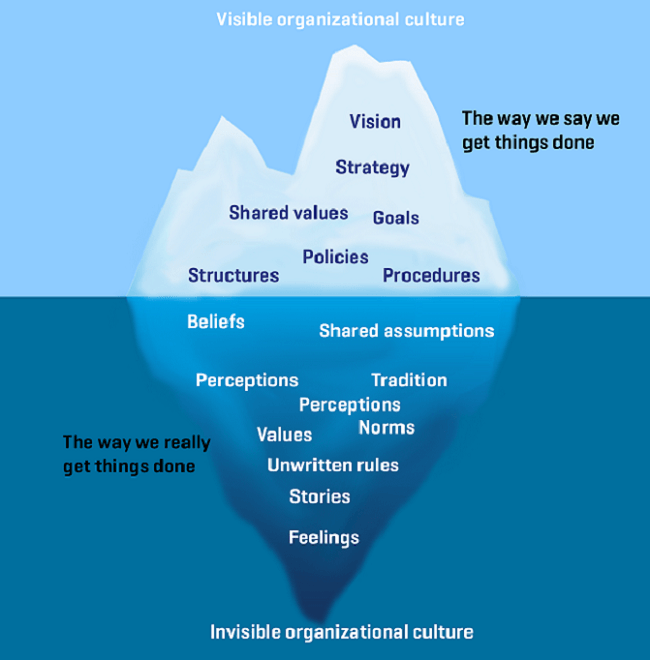
applying the iceberg theory, Amazon looks greater outside but considering the inside situation and the employees believe, Amazon culture is unlike as it sound. Amazon as a global company should acknowledge its workers beliefs and shared assumptions, not only the effort.

Amazon value its workers based on the seen effort but ignoring the 70% unseen beliefs, shared assumption, feeling and perception which are the core drive of organizational success. Treating workers in bad manner would reduce their willingness to contribute on the organization success, in worst case may demotivate them which may lead to high employee turnover, In other hand acknowledging the workers as the family member of the organization and creating happy environment can lead to recommendation to outsiders and gaining good public perception. Amazon has addressed many of these concerns directly, acknowledging public concerns and, in many cases, dismissing or denying the claims.

However any change to organization culture has potential to come up against levels of resistance from staff, people who have a lot of power from their current organization culture may stand agains the change to secure their positions, a lot need to be done to overcome this resistance from staff or employees that are affected by this change. (Hofstede 1980)

According to kotter and Schlesinger (1979) there are four reasons that may make organizations culture difficult to change.

http://AQA | Teaching guide: Kotter and … aqa.org.uk

…..

Kotter & Schlesinger also suggest solution to overcome the inevitable resistance to change when change is required.(1979)

overall we can see from the above theories there would be too many issue for example Amazon may face, but with an effective leadership style organisation culture can be managed to the greater extend by applying Kotter & Schlesinger ‘methods of dealing with resistance to change’ (1979). Therfore Amazon and all the other related industries should try harder to manage their culture not only to avoid conflict but also to enhance the organisation environment, to gain back their reputation, public trust and to improve communication. Managing a culture may also make your employees more productive hence thus will eventually contribute to your revenue and organisation performance as a whole.

Reference lists

Kotter & Schlesinger 1979 Six Methods of Overcoming Resistance to Change [online] available from <https://www.tutor2u.net/>[11 February 2019].

Yuhao, Li. (2010) The Case Analysis of the Scandal of Enron, Canadian Center of Science and Education Vol. 5, No. 10; pp. 4-7 available from google scholar [11 February 2019].

Ahmad alagabari chartered accountants [online] available from < http://www.aaa-cas.com/> [ 11 February 2018].

Kotter & Schlesinger four causes of resistance to change [online] available from <https://www.tutor2u.net/&gt; [11 february 2019].

Handy C Four types of Organisational Culture [online] available from <https://www.businessballs.com/> [11 February 2019].

Laurie J. Mullins (1985) Management & organizational behavior, Pearson eleven edition financial time pitman publishing (2016), pp. 475-477