Organizational culture is unlike national culture it is mainly based on practice that an organization believe or a long established routines and habits that been practicing for time. (Kotter and Schlesinger 1979) As an student I have been in few countries and observed different organizations cultural behavior being as an employee and client, I was convinced by some effective change leaders despite its hardness culture can be managed to the greater extend. I heave worked in an audit firm for few months in UAE (Al Agbari charted accounting) where they had very uniq culture can be classed as Handy power culture, one would only obey its senior without questioning, nor junior employees are allowed to participate or give their opinion on business related issue. In an organisation with a power culture, power is held by just a few individuals whose influence spreads throughout the organisation (kaplan 2017).
Amazon’s Allegedly Harsh Work Culture
One of the most prominent attacks on Amazon’s work culture came from a scathing piece in the New York Times back in 2015. The piece alleged that employees were told that if they “hit the wall,” the only solution was to “climb the wall.” The article alleged that employees were expected to stay late, attend long meetings designed to force employees to tear apart one other’s ideas and respond to emails as late as midnight, (Entrepreneur europe 2018)
It even alleged that the company had a policy that encouraged employees to send anonymous feedback to supervisors as a way to sabotage one other and ruthlessly climb the corporate ladder. One employee, Bo Olson, claimed, “Nearly every person I worked with, I saw cry at their desk.”(Entrepreneur europe 2018)
applying the iceberg theory, Amazon looks greater outside but considering the inside situation and the employees believe, Amazon culture is unlike as it sound. Amazon as a global company should acknowledge its workers beliefs and shared assumptions, not only the effort.
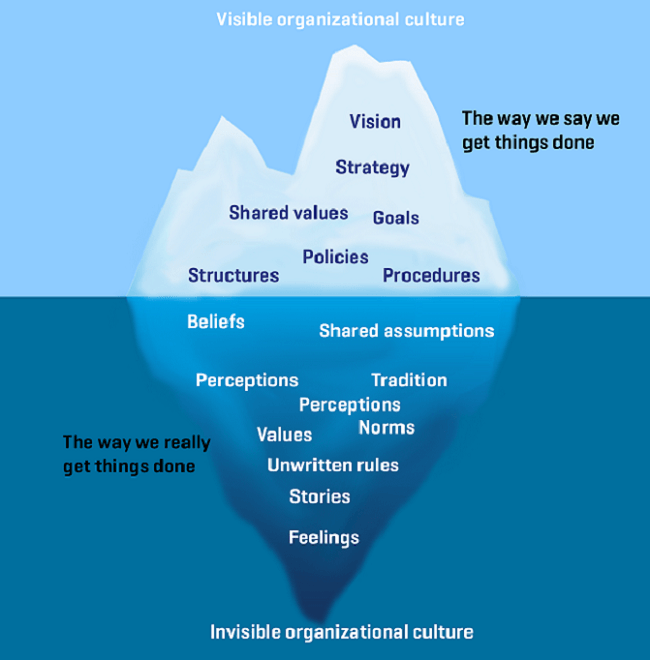
Amazon value its workers based on the seen effort but ignoring the 70% unseen beliefs, shared assumption, feeling and perception which are the core drive of organizational success. Treating workers in bad manner would reduce their willingness to contribute on the organization success, in worst case may demotivate them which may lead to high employee turnover, In other hand acknowledging the workers as the family member of the organization and creating happy environment can lead to recommendation to outsiders and gaining good public perception. Amazon has addressed many of these concerns directly, acknowledging public concerns and, in many cases, dismissing or denying the claims.
However any change to organization culture has potential to come up against levels of resistance from staff, people who have a lot of power from their current organization culture may stand agains the change to secure their positions, a lot need to be done to overcome this resistance from staff or employees that are affected by this change. (Hofstede 1980)
According to kotter and Schlesinger (1979) there are four reasons that may make organizations culture difficult to change.
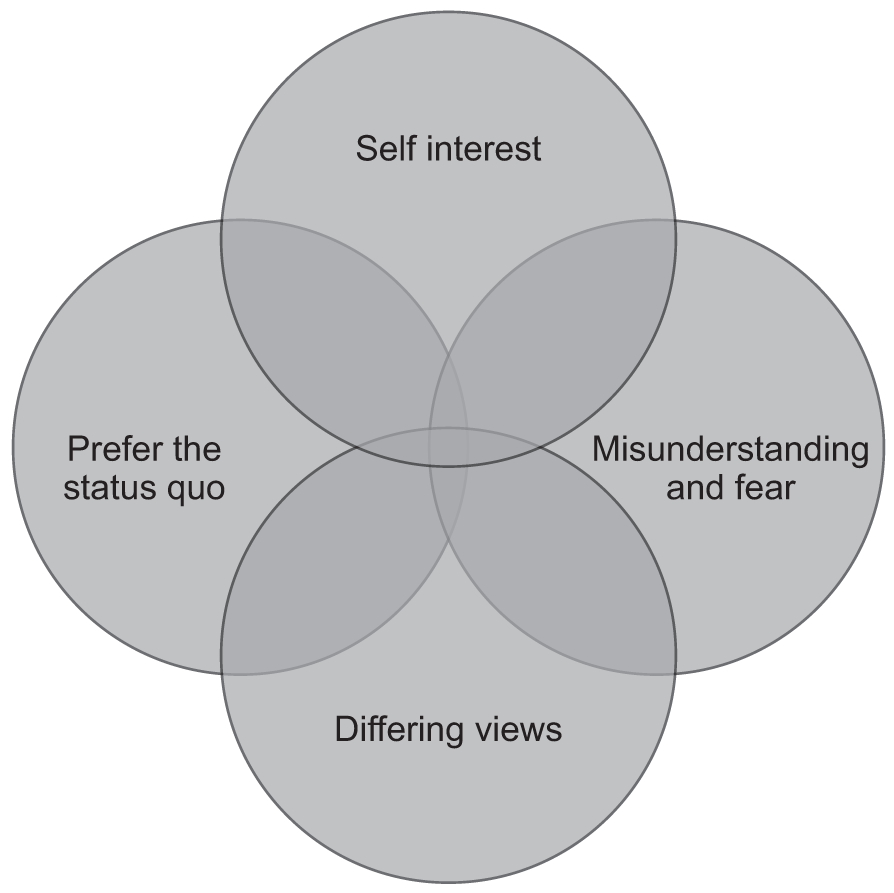
…..
Kotter & Schlesinger also suggest solution to overcome the inevitable resistance to change when change is required.(1979)
overall we can see from the above theories there would be too many issue for example Amazon may face, but with an effective leadership style organisation culture can be managed to the greater extend by applying Kotter & Schlesinger ‘methods of dealing with resistance to change’ (1979). Therfore Amazon and all the other related industries should try harder to manage their culture not only to avoid conflict but also to enhance the organisation environment, to gain back their reputation, public trust and to improve communication. Managing a culture may also make your employees more productive hence thus will eventually contribute to your revenue and organisation performance as a whole.
Reference lists
Kotter & Schlesinger 1979 Six Methods of Overcoming Resistance to Change [online] available from <https://www.tutor2u.net/>[11 February 2019].
Yuhao, Li. (2010) The Case Analysis of the Scandal of Enron, Canadian Center of Science and Education Vol. 5, No. 10; pp. 4-7 available from google scholar [11 February 2019].
Ahmad alagabari chartered accountants [online] available from < http://www.aaa-cas.com/> [ 11 February 2018].
Kotter & Schlesinger four causes of resistance to change [online] available from <https://www.tutor2u.net/> [11 february 2019].
Handy C Four types of Organisational Culture [online] available from <https://www.businessballs.com/> [11 February 2019].
Laurie J. Mullins (1985) Management & organizational behavior, Pearson eleven edition financial time pitman publishing (2016), pp. 475-477

 Adam abadjido
nice work Adam, but don’t you think the last picture talking about the method of dealing with resistance to change isn’t not needed here, a model recommending possible solutions would look nicer. Job well done tho!
LikeLiked by 1 person
Ok dear Zee i note your opinion and work on it .
Thank you
LikeLike
Dear Adam
Organizational Culture might be hard and complex task to manage, but as you have stated above with the strong education and effective leader can be change to the great extend.
thank you for your post
LikeLike
Mr Saeed
i appreciate your opinion, in addition to what i said in the blog its important to have good fellow they will contribute much in the organization culture management. having autocrat fellow in other hand may worsen the culture .
thank you
LikeLike
Dear Adam
Applying Hofseted culture theory, now organization dealing with multi-culture employee, how would you advise those leaders having issue in dealing with these divers culture, is there any leadership theory would you suggest that might be applied to this case.
thank you for your reply
LikeLike
Mr Tidjani
thank for your concern, i have written in my blog two about contemporary leadership style, where i talked about some issue modern leaders facing and suggested some solution to overcome the issue. please read them and i believe you may find the answer to your question. and base on this blog feel free to ask further question .
LikeLike
Mr Adam
Applying your blog to my country Kenya, I argue that organization culture can not be managed, the reason for that is the drawback of the divers ethnicity group, where people would only want to corporate with their tribe tie or with common village, despite they are all educated and trained these issue still the major challenge to change the organization culture.
any idea for that please ?
thank you
LikeLike
Mr Abakar
from your case above i can see you are having national culture in your Kenya organization, what i recommend you is to train your HR department, when the right candidate are hired you would not be facing such culture conflict. Hiring family members is the fundamental issue to deal with.
again having leader not within you can be another solution for your problem.
LikeLike
Hi Dear Adam
Managing culture is an issue of every organization specially I a time where employees are coming from different background. what I belief is organization should have strict policies, and compliances to the set organization culture. a reward and penalties implemented for the breach and compliance of the organization culture. this way every employee would obey and culture change so easily.
hope my options help you.
LikeLike
Dear Abdallah
I would not disagree with your solution knowing where are from and how culture is managed in your organization. your solution may result in high employee turnover, thus the cost will be higher, hiring new employee is dealing with new culture and new training. instead of dealing with all this, the most effective way would be educating and motivating the existing employee, the more employee learn the easier would be the culture to manage, and this may result in high productivity .
hope i have answered you
LikeLike
Thank you Mr Adam I would consider your opinion too
LikeLike
Good perspective, any change to organisation culture has potential to come up against levels of resistance from staff, so if their leader try to use their power to make the change, what do you think would be more efficient way to help their staffs to overcome the lack of security in the changes?
LikeLike
Dear Angela
Kotter (1995) summed up what he perceived as the essential 8 step process for successful organizational transformation. which includes create and communicate the vision and empower people to act on the vision, Planning for and creating short term wins. this model is more effective in transforming the organization culture .
LikeLike